
AI for Impact: Strategies for purpose-driven organizations

Aylin Oncel
Jun 10, 2026
3 min read
Share via:
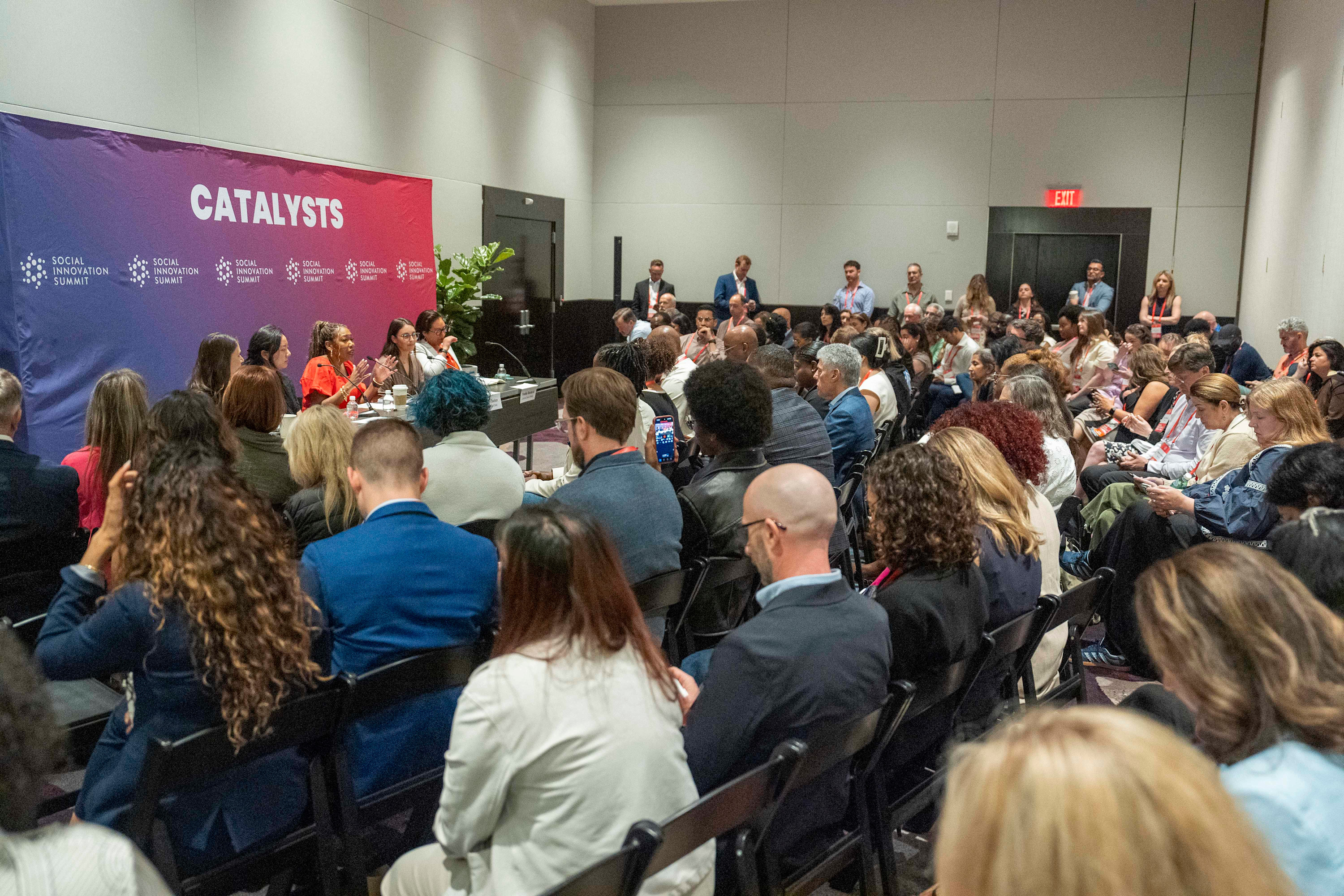
Figuring out how to leverage AI to expand access, strengthen communities, and drive meaningful social progress isn't something any one sector is going to solve alone. That's why at this year's Social Innovation Summit, Goodstack brought senior leaders from companies and nonprofits across health, education, finance, and tech into the same room to talk about what AI actually looks like in practice. The goal was simple: cut through the noise and walk away with real stories, real use cases, and at least one idea worth taking back to work.
Here are the highlights.
Augmented intelligence
One reframing from the conversation is worth leading with. Think of AI tools as augmented intelligence rather than artificial intelligence. The best outcomes happen when human judgment and AI capability work together. Your experience, your context, and your relationships with the communities you serve matter just as much as they ever did. AI doesn't replace your judgment and knowledge, it gives you more capacity to act on them.
Before the tools, the team
AI adoption inside organizations is uneven, and closing that gap takes more than sending a link to a new tool in an internal email. Across most teams right now, whether you sit on a corporate or nonprofit team, you have people who have fully embraced AI alongside people who are skeptical, don't know where to start, or simply haven't had a real opportunity to try any of it yet.
The organizations getting this right aren't rushing past that tension. They're building focused, accessible learning pathways at every level so that no one gets left behind. They're putting governance and safety guardrails in place so people know what's expected, and their leaders are modeling the behavior openly, trying new tools and approaches, talking about what's working, and making it feel safe to experiment.
Build the foundations and start small
The rush to adopt AI-powered everything is getting ahead of building strong foundations. Data is the fuel that runs the AI engine, and without clean, consistent, organized data, even the most sophisticated tools will underdeliver. Many organizations are eager to jump to the most advanced solution before they've done the foundational work to support it.
But you don't need a grand strategy to get started. Some of the most effective AI use in the room wasn't a big platform investment. It was teams methodically automating repetitive tasks, drafting communications faster, pulling insights from data they already had, and freeing up time to focus on the work that actually requires a human. They started with small pilots, kept what worked, and built from there. That's a path any organization can take, regardless of size or budget.
Start where your communities are already looking
A growing number of people now turn to AI tools first when they have a health question, a financial concern, or need help finding community resources. For mission-driven organizations, this is an often-untapped opportunity, and a risk if they're not paying attention to what information is available.
The most forward-thinking leaders in the room had already reoriented around this reality. Rather than waiting for people to come to their websites or programs, they're thinking carefully about how their expertise shows up inside the tools people are already using.
One practical strategy: intentionally crafting website content in formats more likely to be surfaced by AI. Simple FAQs, clear authoritative language, structured information. The goal is to be the cited source, the trusted authority, and where necessary, a counter to misinformation in their field.
This is a meaningful shift in mindset. Your mission doesn't just live in your programs or a few webpages anymore. It needs to live wherever your communities are already looking for answers.
Accelerating progress with AI
There's something genuinely energizing about a room full of companies and nonprofits choosing to share openly, with a collective drive to do more good. The organizations that lean into uncertainty, stay grounded in the communities they serve, and bring their people along for the ride are the ones who will lead.
At Goodstack, that's exactly the kind of progress we're trying to accelerate. Because when companies and nonprofits work better together, with the right tools and the right intentions, the impact compounds.
Ready to put some of this into practice? Goodstack's AI-native services are built to power your giving, volunteering, and grants programs at scale.